Blog Archives
Deciding Our Fate
Follow along class: “suicide” is self-killing; “herbicide” is weed killing; “homicide” is the killing of another human; insecticide is the killing of insects and “genocide” is the killing of a whole group based on race. When we “decide” we are killing off options, the other possible realities we could experience when we make a decision.
Very few people have even heard of Kermit Gosnell, a Philadelphia abortion doctor whose trial over the last five-plus weeks has illuminated the dark, bloody and heartless world of late-term abortions. The fact almost no one has heard of this man is a testimony to the complete apathy of the major news outlets regarding their responsibilities—implied or otherwise—to keep the nation informed.
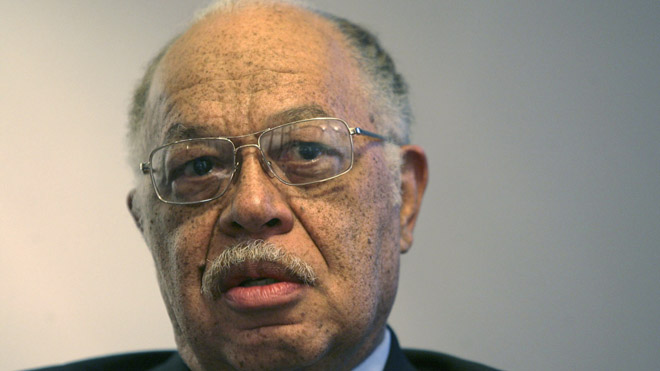
Dr. Kermit Gosnell
As it turns out, few members of the national media consider this a worthy subject to cover.
While I find abortion abhorrent, despicable, cruel, and as an act, nothing short of legalized convenience-killing, my desire is not really to focus on abortion per se, but rather what its practice and tolerance says about us as a people.
Over this past month our country has been shocked with the violence of the Boston Bombings. How could these men choose to do these things? How is it the majority—if not all—of these types of violence been committed by young men obsessed with killing and “striking at” a perceived lack in their world?
As a pastor and a Christian who believes in the authority of Scripture and the exclusiveness of salvation through Jesus Christ, the 1973 SCOTUS decision of Roe-v-Wade which legalized abortion on demand is a watershed event in our country. Regardless of the arguments now forming in your mind, Roe-v-Wade did more than merely legalize abortion; it validated and rationalized an attitude toward newborn life in particular and “life” in general.
The generations born since this turning point of societal and cultural thinking have realized life is nothing more than a whim; a decision of an adult dependent on circumstance and convenience. According to society and now mandated by law, all children have been a mere subject of choice, a convenience and nothing more than the proverbial whim of the mother. Gone is the idea of intrinsic value of life, of its gift and the imprimatur of Deity on it.
It is no wonder why life is viewed as “cheap” and of no value. Life has become nothing more than the result of a choice. Some may say, “Life is what you make of it, what you do!” While I may be able to comprehend the sentiment, what happens when we as a people fail or we are hurt or crippled? What do we do when we get too old to “do” anything making us significant?
The atheistic mind believes life is found only in the “now” (because when you’re dead you’re dead and there’s nothing but nothing) and the past is nothing more than something we “hope” (an avenue of faith I might add) we may improve on.
The evolutionary mind sees us essentially as “Humanity 1.8”; the apes, Cro-Magnon and Neanderthal species we have surpassed prove our superiority. Homo-Sapien-Sapien has overcome, has evolved and survived as the fittest of the species and “Humanity 1.8” is the latest release in the evolutionary line. We are “better” and therefore more valuable because we survived and do survive.
Yet may I point out this rings hollow for those who lost life and limbs in Boston, on September 11 or any other of the mass killing occurring throughout the twentieth century until today.
Do we as a people sacrifice everything on the altar of the convenient? We are taught through the actions of society we all have our “rights” and how dare anyone violate our rights or offend our sensibilities! Those right-wing whackos clinging to their God and their guns are the reasons we have violence and hatred still in our country!
How quickly we have forgotten Nazi Germany outlawed guns and Hitler replaced God. Lenin and Stalin outlawed both God and guns. The resultant loss of life: Hitler killed over 6 million Jews and millions more undesirables; Stalin, not wanting the Nazis to outdo him, conservatively killed over 45 million people.
So much for God and guns, eh?
Yet I offer an observation: if the fittest survive, if we all have a choice, if we all have our rights—especially our right to never be offended—what do we then do with those who cannot speak, cannot stand or especially those who are never given a chance to speak, to stand or even to live?
As a country we mourn our losses—especially difficult are the ones we view as “senseless.” Yet contrary to our words, our actions scream our attitude; life is cheap because choices are easy. We are unable to know the full extent of those choices because we have nothing oppositional giving us a comparison; once we de-cide we have literally “killed off” all of the other realities providing a comparison to our choice.
And after all of the killing and maiming we have witnessed lately, shouldn’t we be more judicious regarding our killing decisions?
I mean, seriously?
 Life. Seriously? Funny!
Vivat Vita in Camera (Long Live Life on Camera)
Aug 15
Posted by Jim Grieme
Vivat Vita in Camera (Long Live Life on Camera)
The post Brit/Pop, alternative rock, pop group Coldplay has been active (according to Wikipedia, et. al.) since 1997. They originally called themselves Big Fat Noises, then Starfish before settling on the name Coldplay. For the sake of recent news and my blog, I’m glad they changed from their original moniker since “The Big Fat Noises” Kiss Cam would not be nearly as catchy.
The infamous Kiss Cam incident of July 15, 2025, quickly became the bane of the couple depicted before the world in this not unfamiliar technology. I’m certain this couple regretted attending such a well-known band with the following of Coldplay; I’m equally certain they attended this concert for the same reasons of that following.
There exists a strong attraction to the forbidden. One of the ancient texts I regularly study tells of a man and woman who had everything any of us could ever imagine (but not quite) yet they chose to do the very thing they were prohibited from doing. It was sadly the only thing they were told not to do. The “forbidden fruit” for this ancient couple was literally a fruit, unlike the couple on the Kiss Cam who were discovered during a secret tryst.
Even in a society and culture such as ours in the United States, which has come close to mandating never to judge anything as wrong, there are many activities even those doing them understand the impropriety. Interestingly, there exists something akin to a genetic attraction to the prohibited—even if that prohibition only exists within ourselves. The same text recounting the eating of the forbidden fruit by the progenitors of humanity testify to their attraction to what they knew to be improper, even though it seemed to be good in their sight.
This brings us back to Coldplay. Their song Viva la Vida (long live life, 2006) provides an interesting backdrop and context for the pain the Kiss Cam culture brought into the lives of this couple during an affair they desired to “long live.” The song Viva la Vida, co-written by Coldplay’s vocalist Chris Martin, tells of one who looks back on the glory of past days when “I used to rule the world, seas would rise when I gave the word.” Yet it is the perspective given in the song applying in the context of the Kiss Cam: “Now in the morning, I sleep alone, sweep the streets I used to own.”
The ancient text referenced earlier, the Holy Bible, records story after story in its Old Testament (so named for its age not its obsolescence) of the attraction and passion for sin. Again, our culture does not wish to label choices as sin; instead, they often seek to “cancel” that regarded as inappropriate. Whereas the Bible from in its beginning provides a means to gain forgiveness, many in our society seek to respond with destruction of those who choose what they deem as wrong.
Viva la Vida’s singer longingly recalls “feeling the fear in [his] enemy’s eyes” as he “used to roll the dice” and all played out in his memory “as the crowd would sing.” Just as the singer in this ballad realized “one minute, I held the key, next the walls were closed on me as I discovered that my castles stand upon pillars of salt and pillars of sand.” Martin’s voice causes the listener to lose any perspective of time, yet in the context of this essay, when did this couple learn their “castles [stood on] pillars of salt and pillars of sand?”
Comprehension dawns on the singer amid memory’s reverie. Those days were “a wicked and wild wind [blowing] down the doors to let me in [and] shattered windows and the “people couldn’t believe what I’d become.” As quickly as the passion of those moments dissipated, the scene changes from the thirst found in moments to a swelling revolt rising from the smoldering ashes of a now public tryst. “Revolutionaries wait for my head on a silver plate, just a puppet on a lonely string.” The singer’s realized finale faces this new reality with resounding regret. “Aw, who would ever wanna be king?”
Humanity finds itself seeking solace and consolation when the passion of the moment is gone leaving only the tinnitus aftereffect belonging to a memory. The accusations begin—not from the crowds who have rendered their judgment’s desire for a head on a platter, but from the icy looks that once held the heat of a lover. Long forgotten memories on stories heard in a church grasp the coldness of what has been rejected. “For some reason I can’t explain I know Saint Peter won’t call my name.”
Jesus, in the Bible I mentioned, says “Come to me, all who labor and are heavy laden, and I will give you rest.” Go to him.
Posted in Social Commentary
Leave a comment
Tags: "Long Live Life on Camera", advice, castles, choices, Chris Martin, Coldplay, Come to me, forbidden fruit, head, improper, inspiration, Kiss Cam, labor and heavy laden, pillars of salt, pillars of sand, progenitors, prohibition, religion, rest, Saint Peter, silver plate, sin, Viva la Vida